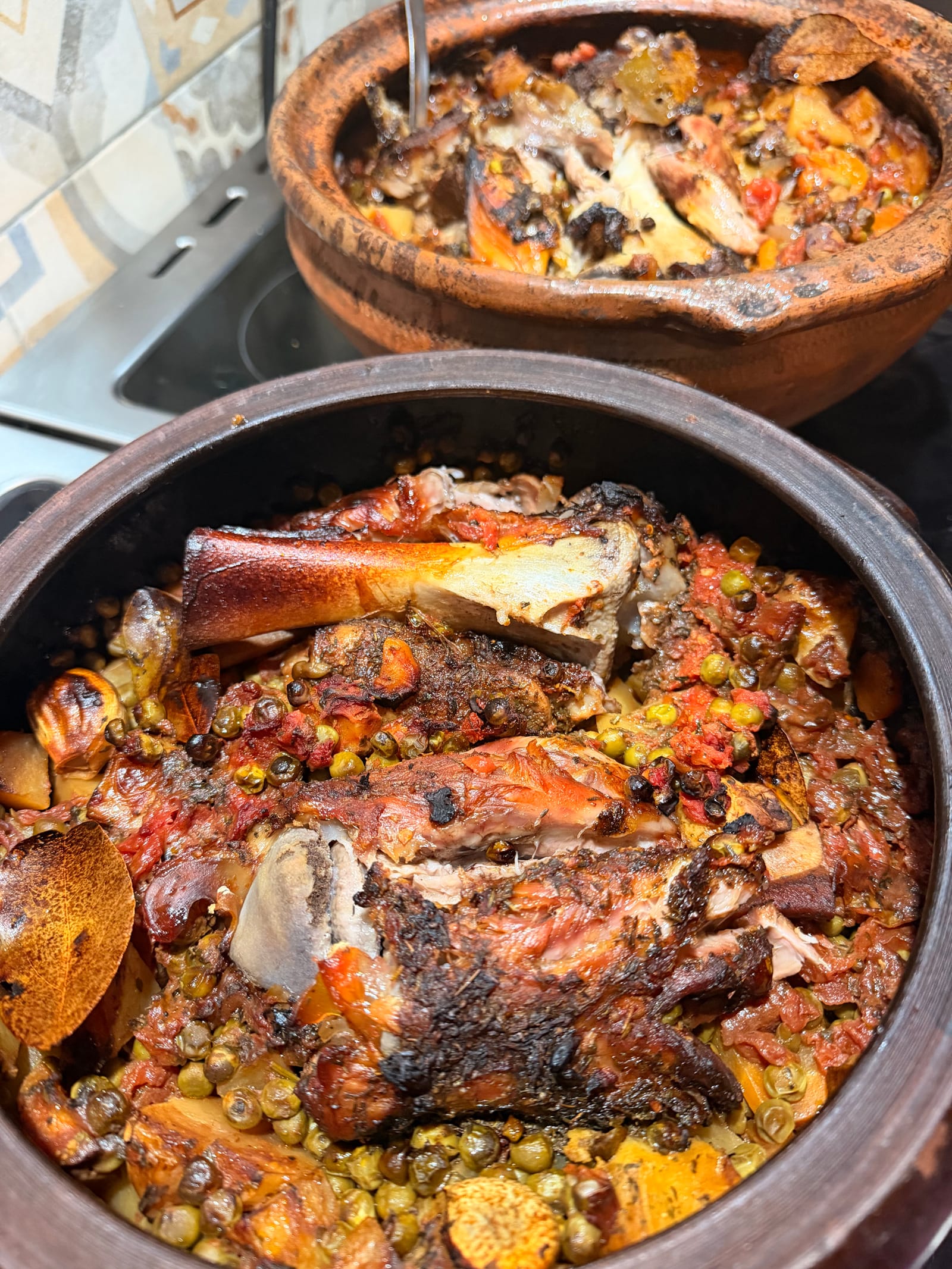
At Burgas Coliving in Vetren there is no house catering. Breakfast and lunch are whatever you make yourself, and dinner is a snack, the brewery next door, or the house family dinner when one is on. Once the owner took a bigger hand in the house, more of the country came into it with her. Here is what turns up on Bulgarian tables around Burgas, fifteen kilometres away.
Out of the clay pot
Gyuvech means “earthenware dish”: both the pot and the stew of peppers, aubergines and beans that cooks in it, with meat or meat stock added1. The small individual pots keep vegetables juicy and stay hot long after they leave the oven2.
Kavarma is the meat version, pork or chicken spiced and prepared the same way1, slow-cooked with onions, peppers, tomato and paprika. The name comes from the Turkish for roasted meat, and every village has its own3.
Moussaka, the Bulgarian way
Minced meat, potatoes, onion, carrot, tomato, paprika and savory, under a topping of eggs, flour and yoghurt4. Turks, Greeks, Romanians and Serbs all eat a version; here it holds “a place of honor in the menu”4.
Shopska salad
Tomato, cucumber, onion and peppers, with grated sirene — a white brined cheese milder than feta — on top. It was invented by the socialist-era state tourism agency for a resort restaurant near Varna, named after the Shopi of western Bulgaria, and grew into a national symbol5. The red, white and green that match the flag are, officially, a coincidence5.
The grill stand
Kebapche is minced pork and beef with black pepper, cumin and salt, rolled into a cylinder and always grilled. It comes with chips under grated sirene, and beer is the usual drink6. Kyufte is often the same mix shaped round or flat, usually with onion6, and can be fried as well as grilled; ask for it nervozno if you want it spicy7.
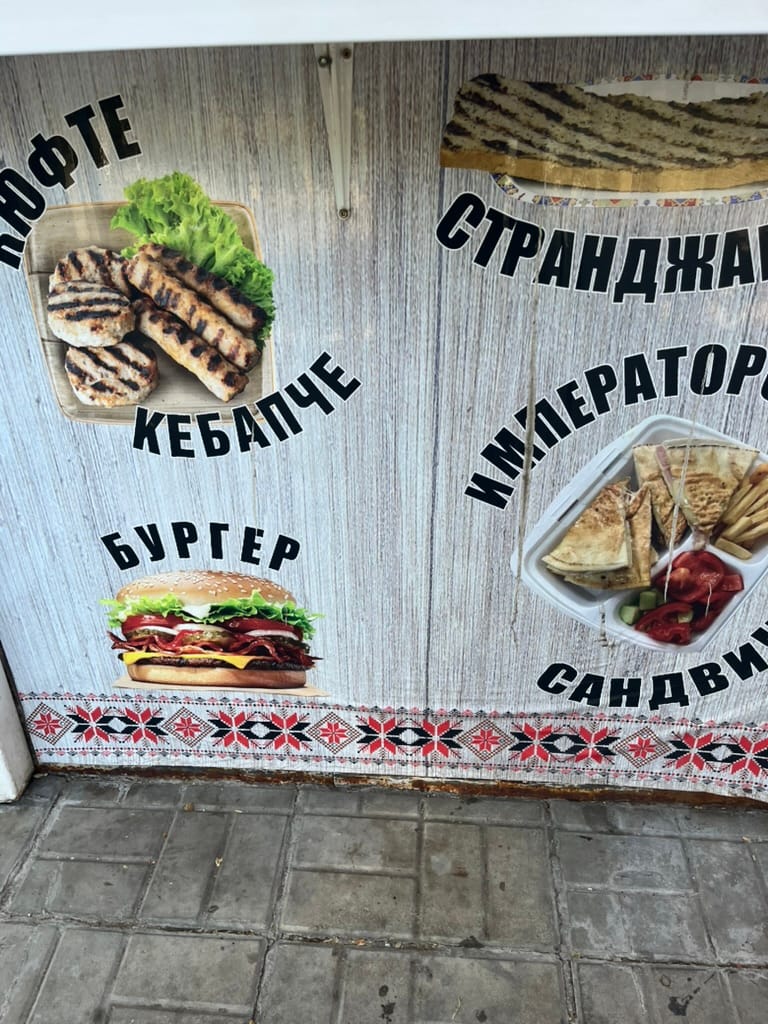
Banitsa, a filled pastry, is sold by bakeries and street vendors in the morning and the evening1; the classic filling is sirene, yoghurt and eggs, eaten with yoghurt, ayran or boza8. Sandwiches and pizza make up most of the rest of Bulgarian fast food1.
At the summer beer and music festival in the Sea Garden, the street-food stands worked from everything the Black Sea and a pig have to offer, which is as accurate a summary as the cuisine gets.
Feasts
A traditional Bulgarian feast in a restaurant settles one question quickly: Bulgarian stomachs are considerably bigger than visiting ones. Nobody from the house won. Nobody was really competing. Not for anyone on a schedule or with a small appetite.
Shopping from Vetren
The supermarket in the village is small and not very varied, and eating a balanced diet from it alone is hard work. The fix is the bus into Burgas: find a market and a supermarket you like in the first days, and the house kitchen does the rest.
References
What it was, and for how long.
When
July–August 2026
Written by
Thomas